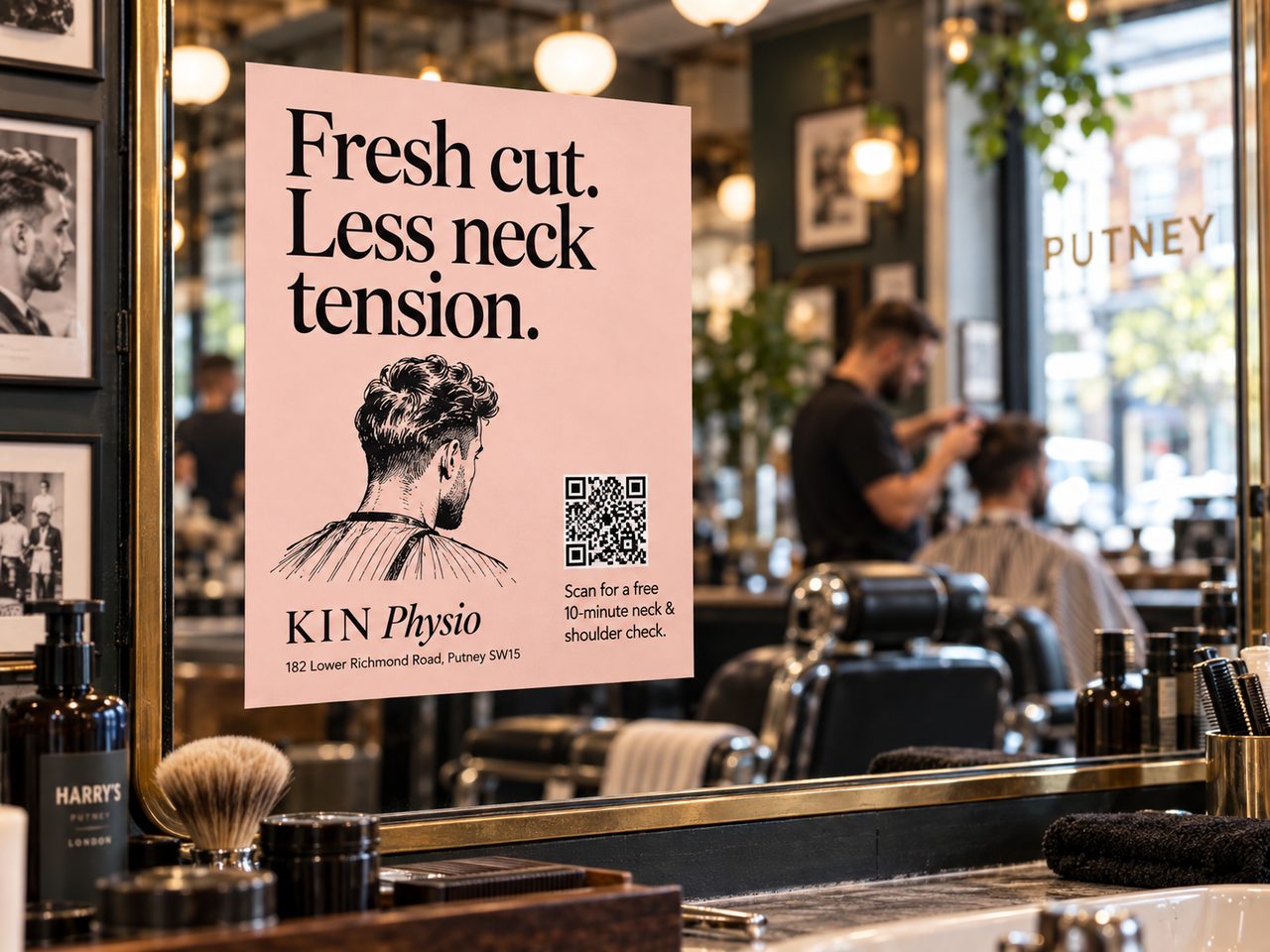
Barbershop · Mirror poster
“Fresh cut. Less neck tension.”
A grooming moment becomes a reminder to deal with stiffness before it becomes a recurring problem.
Reachet put KIN Physio into everyday Putney moments where posture, neck tension, shoulders and knees were already relevant — from coffee and haircuts to cycling and dry cleaning.
Physio demand often starts before someone searches for a clinic. It starts when the neck feels tight after a haircut, the shoulders ache at a desk, or the knees complain after a ride. Reachet built the campaign around those exact local moments.
The best moment to introduce KIN Physio is when the customer can already feel the problem.
Instead of broad postcode reach, each local business filters for a useful audience and situation.
A free 10-minute check, posture check or bike-fit body check gives people an easy first step.
The campaign stayed recognisable, but every message changed to match the physical context around it.
A grooming moment becomes a reminder to deal with stiffness before it becomes a recurring problem.
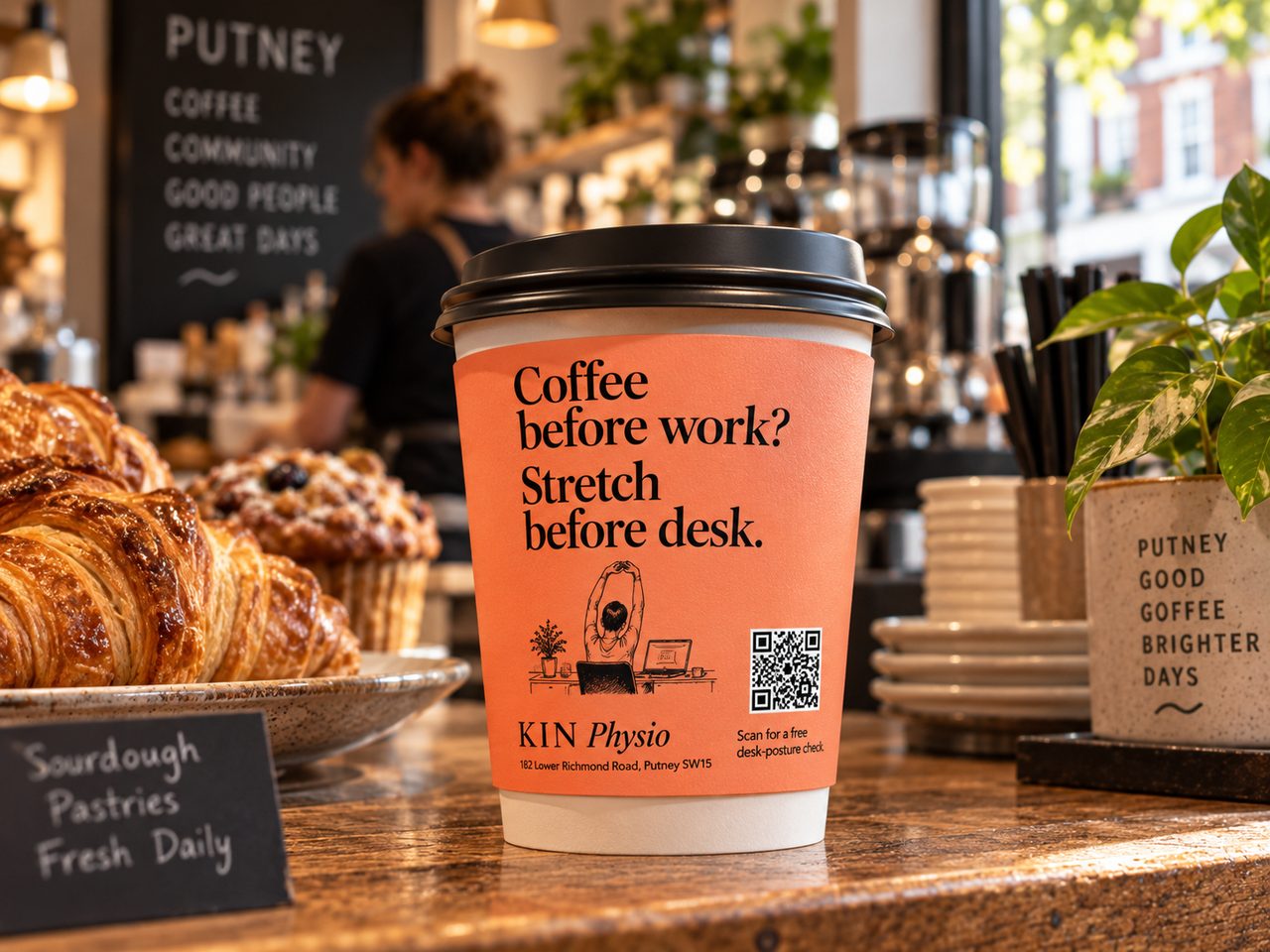
Targets hybrid workers and local professionals before the part of the day most likely to create posture strain.
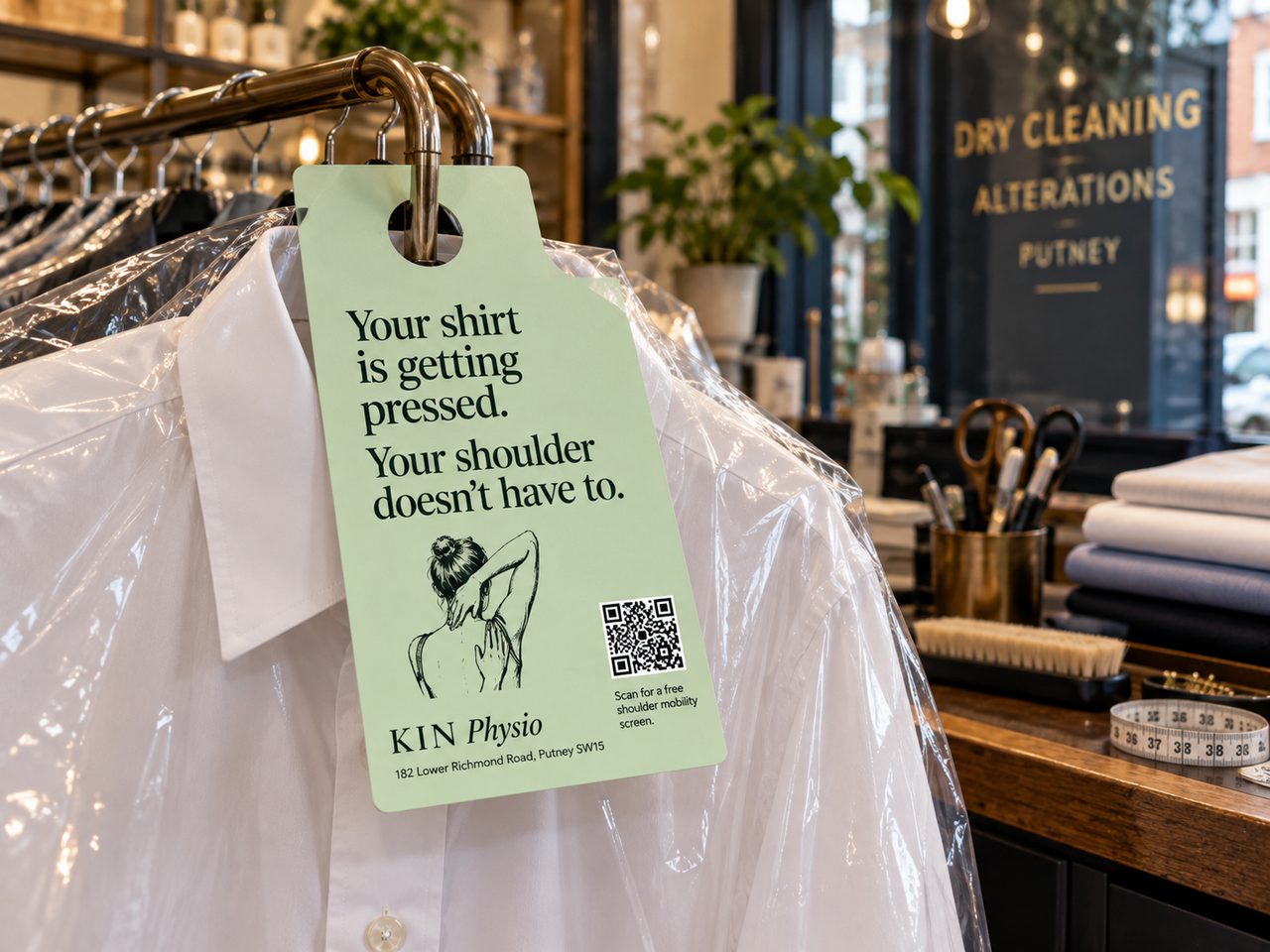
The placement travels home with the customer and ties directly to shoulders, posture and workwear.
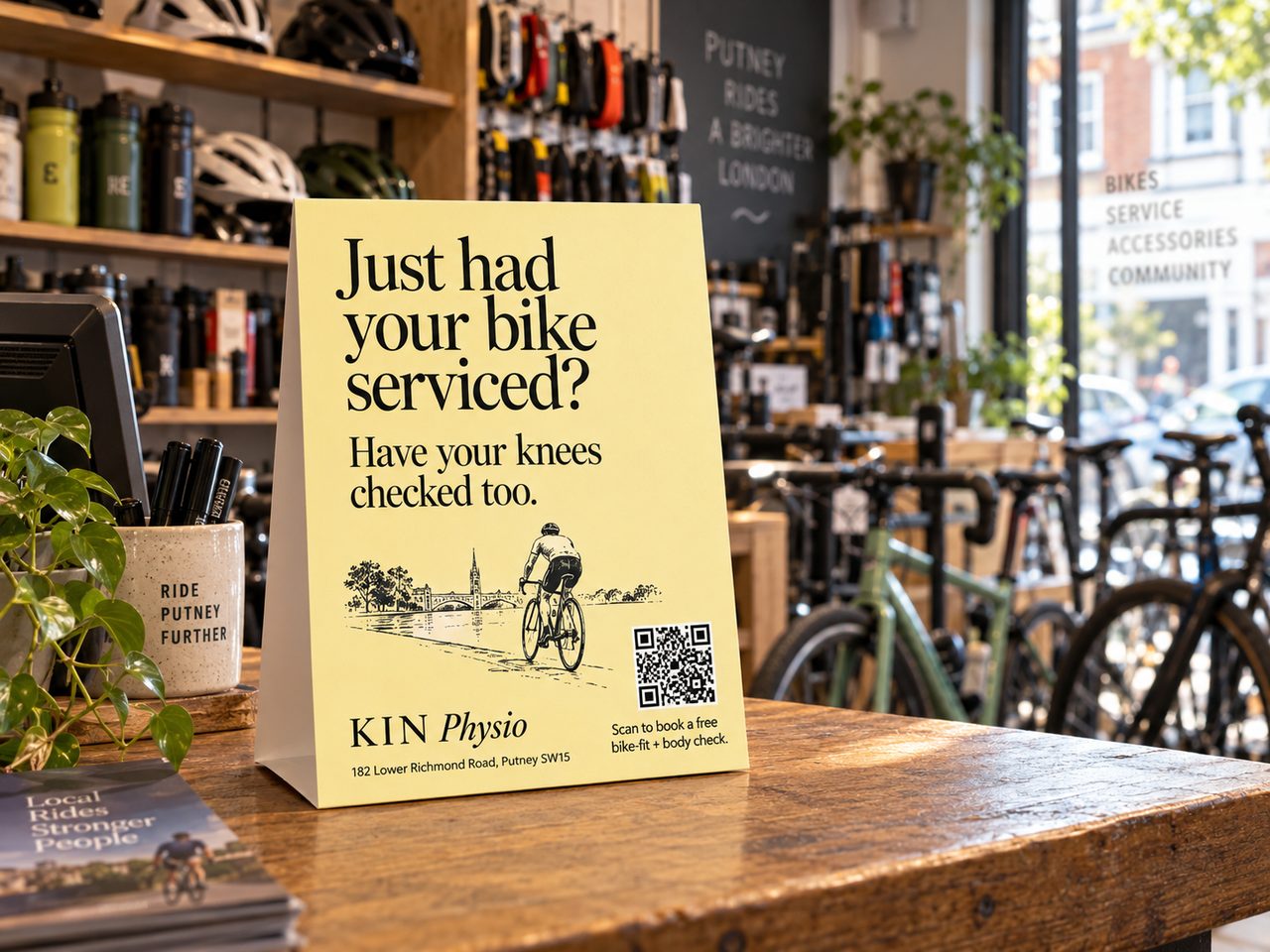
Places KIN Physio directly in front of cyclists already spending money on performance, maintenance and comfort.
Reachet mapped the behaviours most connected with neck, shoulder, posture and knee issues, then matched those moments with verified local hosts around KIN Physio.
Define the symptoms, local profiles and everyday behaviours most likely to create physio demand.
Prioritise barbers, cafés, dry cleaners, bike shops and other high-fit local businesses.
Selected hosts receive a live campaign offer with real budget ready once the placement is activated.
Each ad uses the host environment to make the physio message immediately understandable.
Reachet confirms placements photographically and tracks scans, booked checks, consultations and conversions.
Rather than buying broad local awareness, the campaign concentrates spend in the places where a physical problem, routine or behaviour already makes KIN Physio relevant.
KIN Physio gets trackable appointment demand while the local businesses creating those relevant moments earn from the placements they already own.
KIN Physio did not need to interrupt more people. It needed to appear when someone could already feel why they might need it.Campaign principle Reachet
Give Reachet your audience, area and offer. We find the local businesses, recommend placements, create context-aware messages and return with a launch-ready campaign.